Australians care about people doing it tough, so why doesn’t this feature more in the election campaign?
Caterina Giorgi, For Purpose
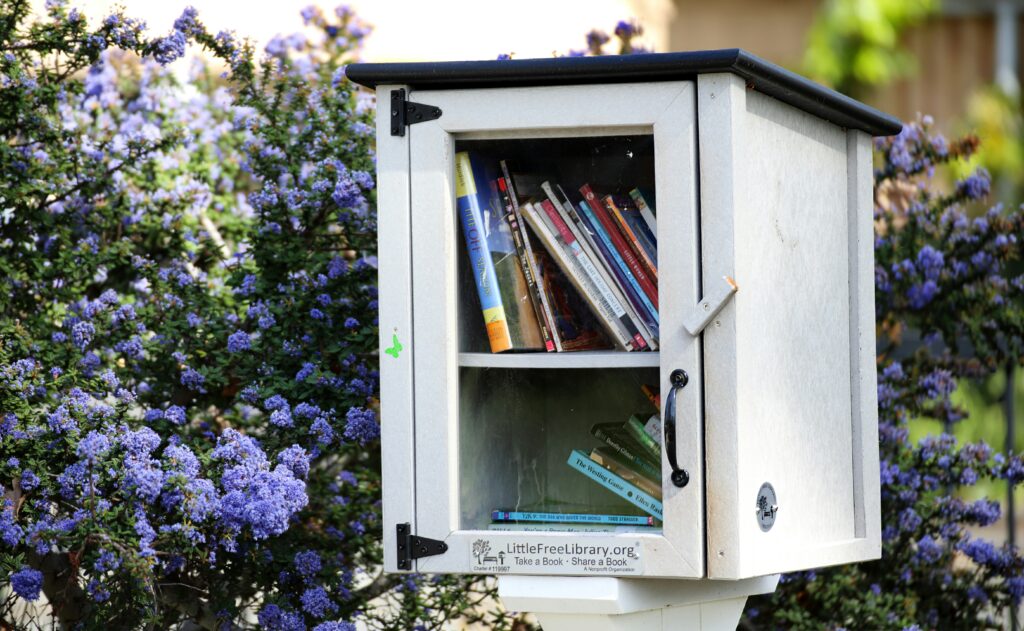
As I walk around my neighbourhood, I see many signs that people care about others. It’s in the street libraries outside of houses, the community pantry sitting in the open space near the local shops and the growing microforest that was crowdfunded by the community.
It’s not just in physical structures where these acts of kindness are apparent. At our local shops, our café donates food at the end of each day to local charities and the grocer is always providing gifts to community events.
At my daughter’s school, there is no shortage of volunteers to support sporting events, and fetes. At a very personal level, when I’m racing to school at the afternoon bell and I’m not sure that I’m not going to make it in time, there is always someone who is willing to help out.
And it doesn’t stop there. When someone is sick, people offer to drop off food or do the groceries. When someone has a baby, there are packages that are left at doorsteps with offers to clean, wash or help out. When someone is away from their home, people offer to pet sit or water the lawn.
In moments of difficulty this support increases and signs of community are more apparent. During COVID restrictions, rock gardens and pump tracks emerged in open green spaces, and people had socially distanced chats across the road to connect and check in on each other.
All of these signs show something that I was taught by my mum at a very young age – that community is important and we should do all we can to help each other out. Mum would often say that even a quick ‘hello’ to a stranger can change their day, particularly for people who may be isolated or having a hard time.
This isn’t just apparent in my community, it’s a sentiment that shared.
In 2022, 83 per cent of Australians said that they had informally helped others in the previous year. Around half (51 per cent) had donated to charity, just over a third had visited someone in hospital (34 per cent) and about the same helped someone through a personal crisis (31 per cent).
This sense of altruism and community is also shown when talking to people about one of the most significant issues of this election; housing. Almost three quarters of people recently surveyed (72 per cent) agreed that “the government should guarantee everyone has a suitable home.” An even greater number (81%) agreed that “I would be okay with house prices going down if it meant housing was more affordable.”
We also see the value and benefits of diversity and inclusion, with 78 per cent of people agreeing that ‘accepting immigrants from many different countries makes Australia stronger’.
You would be forgiven for not thinking that this is the case when looking at the way that the election campaign is currently playing out.
There are currently 3.3 million Australians who are living below the poverty line, including 761,000 children. One in three sole parent households and one in four people with disabilities live in poverty. Households where the main income-earner is a woman are almost twice as likely to live in poverty than households where the main income-earner is a man (18 per cent vs 10 per cent).
Despite this, there has been little talk about people who are experiencing the most disadvantage and very few announcements focused on how we contribute to greater levels of equity during this election campaign. We haven’t been hearing about people living in poverty, experiencing homelessness or battling with ongoing and multiple chronic illnesses.
Even issues that were discussed at length just a few months ago, like the need to prevent gender-based violence and violence again children, seem to have evaporated behind a myriad of announcements that aim to target the ‘middle’. While none of these announcements address the underlying causes that contribute to the disadvantage that exists.
Like many people, I want to live in an Australia where everyone has a home, where people have enough resources to survive and thrive and where people who are doing it tough are provided by governments with the supports that they need.
But right now, we have a system that benefits a few, at the expense of the many.
To adjust this requires a bold vision for our country. One that acknowledges that we need to prioritise people ahead of the profits a small number of corporations, that the health and wellbeing of our community is more important than wealth of a few, and that investments in education and health are far more important than tax benefits for billionaires.
Free healthcare, dental, early childhood education and university is all possible. Preventing violence, ill health and gambling harm is all possible. It’s just about what our political leaders choose to prioritise and about what we as a community expect and demand.
This article was first published on Women’s Agenda.
23 April 2025